PhD researcher joins FSCN battery research collaboration
Luisa Policastro, a PhD student from Politecnico di Torino, is spending seven months at the FSCN Research Centre at Mid Sweden University as part of an international collaboration focused on advanced battery technologies, under the supervision of FSCN researcher Ghadir Razaz.
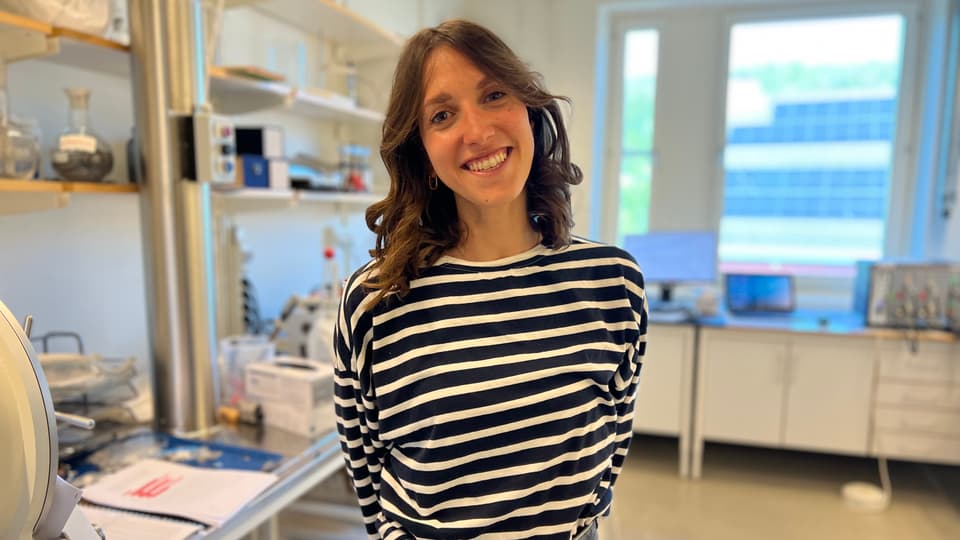
Her research investigates novel current collector structures for anode-free solid-state lithium metal batteries, a promising technology that could contribute to more sustainable energy storage solutions.
International collaboration is an important driver of research progress. Since May, Luisa Policastro has been conducting research at FSCN Research Centre through a collaboration involving Politecnico di Torino, the MSAM- University of Waterloo in Canada, and FSCN Research Centre at Mid Sweden University.
Policastro's research focuses on current collectors – the conductive layers that transport electrical current between a battery's electrodes and the external circuit. By developing new materials and structures for these components, researchers aim to improve battery performance, durability, and sustainability.
Strong research connection
The connection to FSCN emerged through a scientific conference in Spain, where Policastro presented her research. Following her presentation, FSCN researcher Ghadir Razaz recognized clear links between their respective research areas and encouraged her to visit Mid Sweden University during her doctoral studies.
"After my presentation, Ghadir contacted me because there was a strong connection between our research. FSCN has expertise that fits very well with my work," says Policastro.
During her stay, she is working on the development and characterization of advanced copper current collector structures for solid-state battery applications. The project combines additively manufactured three-dimensional porous copper, produced by collaborators at the MSAM-University of Waterloo, with solid-state electrolytes.
The long-term goal is to investigate new approaches for anode-free solid-state lithium metal batteries.
"My work here starts with material characterization and continues with the synthesis of the solid-state electrolyte. We combine the different materials, evaluate their performance, and then further develop and analyse the system," she explains.
Valuable access to the research environment
The research complements ongoing work at FSCN within advanced battery materials and electrochemical energy storage. For Luisa Policastro, access to FSCN's research environment has been valuable.
"There are many experienced researchers here, as well as advanced equipment and methodological expertise, she says.
Before returning to Italy in December, she hopes the collaboration will produce results that can be published and contribute to the development of future energy storage technologies.
"I am very interested in the energy transition. Research in this field is important because it can help create more sustainable energy solutions for the future."
Outside the laboratory, she has also appreciated her first months in Sweden.
"I enjoy working in the lab, but I also like the environment around the university and Sundsvall. I enjoy outdoor activities, and there are many opportunities here to spend time in nature and relax."